Mrs India Ramp Walk: Complete Pageant Walk & Stage Presence Guide
Learn how to prepare for the Mrs India ramp walk with practical tips on posture, pace, turns, eye contact, expressions, footwear, confidence and stage presence.
 mrsindia
Mrs India Ramp Walk: Complete Guide to Posture, Walk, Turns,
Confidence & Stage Presence
The moment a contestant steps onto the stage, the audience sees more than her outfit.
They see her posture, confidence, movement, expressions and presence.
That is why the Mrs India ramp walk deserves deliberate preparation.
For someone with professional modelling experience, walking on a stage may feel familiar. For someone who has never walked a runway before, it can initially feel intimidating.
The good news is that ramp walking is a skill that can be learned and improved through practice.
The current official Mrs India Queen of Substance website showcases Ramp Walk as part of the pageant experience, alongside activities such as grooming, fitness, traditional presentation and talent. (Mrs India Queen of Substance) The organisation's current information also states that previous modelling experience is not required. (Mrs India Queen of Substance)
That means a first-time contestant does not need to arrive as a professional model.
She needs to arrive prepared to learn.
2026 verification note: Exact ramp-walk rules, choreography, stage dimensions, footwear requirements, walk sequence and scoring can vary by season. Confirm the current instructions with the official Mrs India Queen of Substance team before the event.
H2: What Is a Mrs India Ramp Walk?
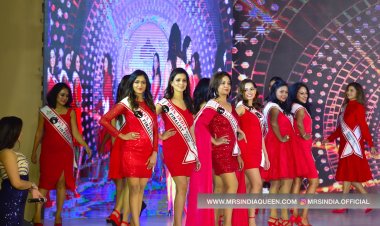
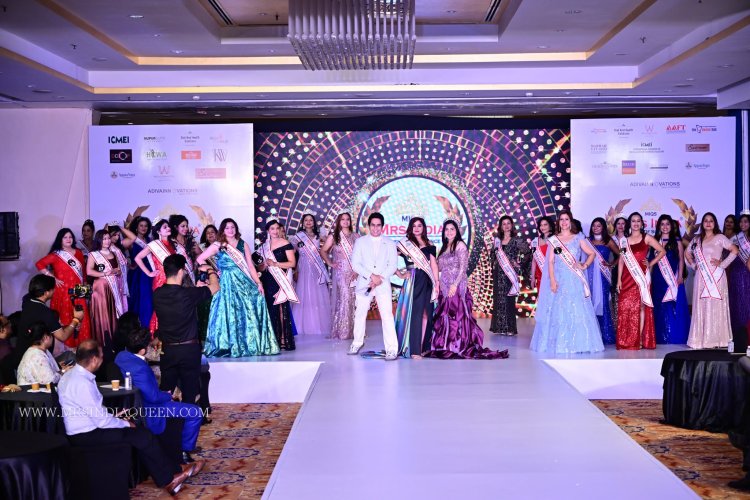
A pageant ramp walk is a structured stage presentation in which contestants walk with confidence and elegance while demonstrating posture, movement, expressions and stage awareness.
It is different from simply walking from one place to another.
A good pageant walk requires coordination between:
-
Posture
-
Foot placement
-
Pace
-
Arm movement
-
Facial expression
-
Eye focus
-
Turns
-
Stopping points
-
Stage positioning
-
Confidence
The objective is not to imitate a professional fashion model.
It is to develop a walk that looks natural, confident and appropriate to a pageant setting.
H2: Why Is the Ramp Walk Important?
A ramp walk gives contestants an opportunity to demonstrate stage presence.
The official Mrs India Queen of Substance platform describes itself as a pageant celebrating women through areas including beauty, talent, intelligence and compassion. (Mrs India Queen of Substance)
Therefore, the walk should be considered one part of a much larger presentation.
Your walk can communicate:
Confidence
You appear comfortable taking your place on stage.
Elegance
Your movements are controlled rather than rushed.
Personality
Your expressions and energy reflect who you are.
Discipline
You can follow stage instructions and choreography.
Presence
You command attention without forcing it.
H2: Step 1 — Fix Your Posture
Posture is the foundation of your walk.
Before worrying about dramatic turns or expressions, work on standing correctly.
H3: Head
Keep your head naturally lifted.
Don't look at the floor.
Don't raise your chin excessively.
Think:
Forward and confident.
H3: Shoulders
Keep your shoulders relaxed.
Avoid pulling them excessively backward.
H3: Back
Maintain a natural upright posture.
Avoid excessive arching.
H3: Core
Keep your core gently engaged to support balance.
H3: Arms
Allow your arms to move naturally with your stride.
Don't deliberately swing them too much.
A useful practice exercise is to stand against a wall and become aware of your natural alignment before walking away from it.
H2: Step 2 — Find Your Natural Walking Pace
One of the most common mistakes beginners make is walking too quickly.
Nervousness often creates speed.
You step onto the stage.
You see the audience.
You think:
“I need to finish this quickly.”
And suddenly your elegant entrance becomes a hurried walk.
Instead, slow down.
Take controlled steps.
Allow the audience and judges to see you.
Your pace should feel:
-
Deliberate
-
Comfortable
-
Controlled
-
Confident
But don't walk unnaturally slowly either.
The ideal pace depends on the choreography, music and stage instructions.
H2: Step 3 — Practise Foot Placement
You don't need to force an exaggerated catwalk technique.
For a pageant presentation, focus first on stability and elegance.
Practise walking in a straight line.
Place one foot naturally in front of the other while maintaining balance.
Avoid:
-
Looking down constantly
-
Crossing your feet excessively
-
Taking uneven steps
-
Dragging your feet
-
Taking steps that are too large
Record yourself walking from the front and side.
You may notice things you cannot feel while walking.
H2: Step 4 — Learn to Walk in Heels
If heels are part of the official requirements for your round, practise in advance.
Don't wait until the pageant.
Start with manageable heels and gradually become comfortable with the height you intend to use.
Practise:
-
Standing
-
Walking forward
-
Stopping
-
Turning
-
Walking backward if required
-
Navigating corners
-
Walking on the actual type of surface where possible
Safety comes first.
A confident walk in comfortable footwear is better than an unstable walk in excessively high heels.
H2: Step 5 — Practise the Stop
Stopping is just as important as walking.
When you reach the designated point:
-
Slow down
-
Stop cleanly
-
Establish your posture
-
Look forward
-
Hold your expression
-
Present yourself
-
Wait for the cue
-
Continue when instructed
Don't stop abruptly and immediately start looking around.
Your stop should look intentional.
H2: How to Do a Pageant Turn
The exact turn may be choreographed differently depending on the event.
But the principle remains:
Control the movement.
Don't rush the turn.
Keep your balance.
Know where you are going next.
Practise turns slowly before adding speed or music.
H3: The Three-Part Turn Practice
Practise:
Walk → Stop → Turn
Then:
Walk → Stop → Pose → Turn
Then:
Walk → Stop → Pose → Turn → Exit
Once the sequence feels natural, add music.
H2: Eye Contact During the Ramp Walk
Eye contact can transform your stage presence.
Don't stare continuously at one judge.
Instead, allow your eyes to move naturally across the room.
Look toward:
-
Judges
-
Audience
-
Camera positions where appropriate
-
The direction of travel
Avoid constantly looking down at your feet.
Your eyes should communicate:
“I am comfortable being here.”
H2: What Should Your Facial Expression Be?
A pageant walk does not require one permanent smile.
Your expression should match the presentation.
You can use:
-
A natural smile
-
A confident neutral expression
-
A warm expression
-
A more dramatic expression for certain stage moments
The important word is:
Natural.
Practise different expressions in front of a mirror.
Then record them on camera.
Some expressions that feel subtle in a mirror can appear exaggerated on video.
H2: How to Pose at the End of the Ramp
The pose should complement your personality and the outfit.
You might use:
-
A classic standing pose
-
A slight body angle
-
A hand-on-waist pose
-
A controlled gown presentation
-
A simple elegant stance
Avoid adding unnecessary movements.
The more complicated the pose, the more opportunities there are for something to go wrong.
A clean pose can be more effective than an elaborate one.
H2: Ramp Walk and Different Pageant Outfits
Your walk should adapt to your outfit.
H3: Evening Gown
Focus on:
-
Smooth movement
-
Elegant pace
-
Controlled turns
-
Managing the gown
-
Confident posture
If your gown has a train, practise handling it.
H3: Traditional Costume
The walk should respect the character of the outfit.
A traditional presentation may benefit from more graceful and culturally appropriate movement.
H3: Talent Outfit
Your movement should support the performance.
H3: Formal Interview Outfit
Keep the movement polished and professional.
The clothing should never dictate a walk you cannot execute comfortably.
H2: How to Walk With a Long Gown
Long gowns require special rehearsal.
Before the event, practise:
-
Walking forward
-
Turning
-
Stopping
-
Changing direction
-
Managing the train
-
Walking around other contestants
Check whether your heel catches the fabric.
Check whether you can move without stepping on the gown.
If you have a dramatic train, practise the exact pose and turn you intend to use.
H2: Ramp Walk Body Language
Your body language begins before your first step.
It starts when you are waiting backstage.
Stand tall.
Avoid:
-
Looking nervous
-
Constantly adjusting your outfit
-
Fidgeting
-
Looking at the floor
-
Excessively talking backstage
When your name is called, take a breath.
Then walk.
That transition from waiting to performing is part of stage presence.
H2: Confidence vs. Overconfidence
There is a difference.
Confidence says:
“I belong here.”
Overconfidence says:
“I am better than everyone else.”
A pageant stage should allow you to celebrate yourself without diminishing anyone else.
Your walk should be powerful without becoming aggressive.
Your expression should be confident without becoming forced.
Your energy should be positive.
H2: Do You Need Professional Modelling Experience?
According to the current official Mrs India Queen of Substance information, previous modelling experience is not required. (Mrs India Queen of Substance)
This is particularly important for women who may be considering a pageant for the first time.
A homemaker, entrepreneur, professional, mother or woman returning to personal goals after marriage may have little or no runway experience.
That doesn't mean she cannot learn.
The official website describes grooming and training as part of the journey for selected participants. (Mrs India Queen of Substance)
H2: A 15-Minute Daily Ramp Walk Practice
You don't need to spend hours every day.
Start with 15 focused minutes.
Minutes 1–3: Posture
Stand tall.
Relax your shoulders.
Check your alignment.
Minutes 4–7: Straight Walk
Walk across a room repeatedly.
Focus on:
-
Pace
-
Foot placement
-
Eyes
-
Arms
Minutes 8–10: Turns
Practise your turns slowly.
Minutes 11–13: Poses
Practise three simple poses.
Minutes 14–15: Camera
Record one complete walk.
Review it.
Repeat the next day.
Consistency is more useful than one long practice session followed by no practice for a week.
H2: The Mirror Is Useful—But the Camera Is Better
A mirror shows you what you look like from one angle.
A camera shows you how your movement actually appears.
Record:
-
Full-body walk
-
Entrance
-
Turn
-
Pose
-
Exit
Then watch without judging yourself emotionally.
Ask:
Am I rushing?
Are my shoulders tense?
Am I looking down?
Are my arms natural?
Does my expression change?
Do I look comfortable?
This makes practice measurable.
H2: Practise With Different Music
If the official event includes music during the ramp walk, practise with different tempos.
Try:
-
Slow music
-
Medium tempo
-
More energetic music
This teaches you not to become completely dependent on one rhythm.
However, the final choreography should always follow the instructions given by the event team.
H2: Ramp Walk Mistakes to Avoid
1. Looking at the Floor
This immediately reduces perceived confidence.
2. Walking Too Fast
Nervousness often causes this.
3. Overdoing the Hip Movement
Don't imitate a fashion runway style that doesn't feel natural.
4. Excessive Arm Movement
Keep the movement controlled.
5. Practising Only in Flat Shoes
If your final walk requires heels, practise in appropriate footwear.
6. Not Practising Turns
Turns can expose balance problems.
7. Changing Your Walk at the Last Minute
Once you have developed a comfortable walk, don't suddenly attempt a completely new technique immediately before the event.
8. Copying Another Contestant
Your walk should become your own.
H2: How to Create Your Signature Walk
A signature walk doesn't mean performing something dramatic.
It can be a combination of:
-
Your natural posture
-
Your pace
-
Your expression
-
Your pose
-
Your turn
-
Your personality
For example, one contestant might naturally have a calm, elegant presence.
Another might have an energetic, expressive personality.
Both can develop compelling stage walks.
Your goal is not:
“How do I walk like her?”
Your goal is:
“How do I walk like the strongest version of myself?”
H2: How Grooming and Ramp Walk Work Together
Ramp walk training should not happen in isolation.
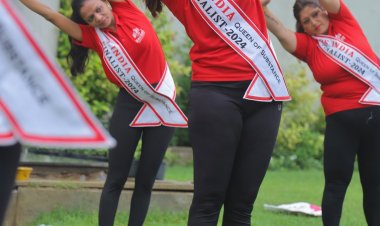
The current Mrs India Queen of Substance programme describes grooming and training as part of the finalist journey, with areas including personality development, communication, ramp walk, presentation and stage confidence. (Mrs India Queen of Substance)
Think of the pageant presentation as one connected system:
Grooming → Posture → Walk → Expression → Communication → Confidence → Stage Presence
Improving one area can strengthen another.
H2: Ramp Walk Preparation for First-Time Contestants
If this is your first pageant, start with fundamentals.
Week 1
Focus on:
-
Posture
-
Balance
-
Straight walking
-
Comfortable footwear
Week 2
Add:
-
Turns
-
Poses
-
Expressions
-
Camera practice
Week 3
Add:
-
Music
-
Outfit rehearsal
-
Full stage simulation
Week 4
Focus on:
-
Refinement
-
Confidence
-
Consistency
-
Mock performance
If your event is sooner than four weeks away, compress the programme rather than skipping the fundamentals.
H2: What Judges Can See in a Ramp Walk
A ramp walk is visible communication.
Without speaking, you can demonstrate:
-
Confidence
-
Comfort
-
Discipline
-
Elegance
-
Stage awareness
-
Personality
This is why the walk should not be treated as merely “walking in a dress.”
It is a performance of presence.
H2: The Best Ramp Walk Is the One You Can Control
There is no guaranteed formula for winning a pageant.
A contestant cannot control every judging decision.
But she can control her preparation.
She can practise.
She can improve.
She can become comfortable in her footwear.
She can understand stage directions.
She can work on posture.
She can prepare her expressions.
She can learn to recover gracefully from a small mistake.
That last point is especially important.
If you miss a step, don't panic.
Don't make a face.
Don't apologise to the audience.
Recover.
Continue.
A confident recovery can look more professional than a visibly nervous reaction to a minor mistake.
H2: Mrs India Ramp Walk Checklist
-
Practise posture every day
-
Develop a comfortable walking pace
-
Practise in appropriate footwear
-
Practise turns
-
Practise stopping and posing
-
Record yourself on camera
-
Review your body language
-
Practise with different music
-
Rehearse in your actual outfit
-
Check gown length and movement
-
Practise your entrance and exit
-
Maintain natural eye contact
-
Keep expressions authentic
-
Follow the official choreography
-
Avoid copying another contestant
-
Prioritise comfort and safety
H2: Frequently Asked Questions
What is the Mrs India ramp walk?
It is a stage presentation where contestants demonstrate posture, movement, confidence, expressions, stage awareness and personality while walking according to the event format.
Do I need modelling experience for Mrs India?
The current official Mrs India Queen of Substance website states that modelling experience is not required. (Mrs India Queen of Substance)
How can I improve my Mrs India ramp walk?
Practise posture, controlled walking, turns, poses, expressions and camera presentation. Regular short practice sessions can be more effective than occasional intensive practice.
How long should I practise every day?
There is no mandatory universal duration. A focused 15–20 minute daily session can be a useful starting point, with additional rehearsal as the event approaches.
Should I walk slowly or quickly?
Your pace should follow the official choreography and music. In general, avoid rushing and maintain controlled movement.
Should I smile during the ramp walk?
A natural smile can work well, but you don't need to maintain the exact same expression throughout the entire presentation.
What if I am nervous?
Practise enough that the basic movement becomes familiar. Before entering the stage, take a controlled breath, relax your shoulders and focus on your first few steps.
What footwear should I use?
Follow the official instructions for your round. If heels are required, practise extensively in the actual footwear before the event.
Should I copy professional models?
No. Professional modelling techniques can be useful to study, but your final pageant walk should feel natural and appropriate to you.
What should I do if I make a mistake on stage?
Recover calmly, maintain your posture and continue following the stage direction. Don't allow a small mistake to become the focus of your performance.
Is ramp walk the only important part of Mrs India?
No. The official pageant information describes a broader experience involving areas such as beauty, talent, intelligence, compassion, grooming, interview/Q&A and other pageant activities. (Mrs India Queen of Substance)
Are the ramp-walk rules the same every year?
Not necessarily. Stage format, choreography, dress requirements, timing and judging procedures can change. Confirm the current season's instructions directly with the official organisation.
H2: Internal-Link Recommendations
Connect this article with the existing Mrs India SEO cluster:
Blog #1
Anchor: Best Mrs India Pageant in India
Blog #2
Anchor: Mrs India Registration 2026
Blog #3
Anchor: Mrs India Eligibility Criteria
Blog #4
Anchor: How to Participate in Mrs India
Blog #5
Anchor: Best Pageant for Married Women in India
Blog #6
Anchor: Mrs India Audition
Blog #7
Anchor: Benefits of Participating in Mrs India
Blog #8
Anchor: How to Prepare for Mrs India Audition
Blog #9
Anchor: Mrs India Grooming and Training
Blog #10
Anchor: How to Win Mrs India Pageant
Blog #11
Anchor: Mrs India Interview Questions
Blog #12
Anchor: What to Wear for Mrs India
Next — Blog #14
Anchor: Mrs India Talent Round
Future — Blog #15
Anchor: Mrs India for Homemakers
Future — Blog #16
Anchor: Mrs India for Working Women
Future — Blog #23
Anchor: Mrs India and Women Empowerment
Future — Blog #24
Anchor: Pageants, Confidence and Personal Branding
H2: Your Walk Is More Than Your Steps
A strong ramp walk isn't created by trying to look like someone else.
It develops when preparation meets personality.
You learn to stand confidently.
You learn to walk with control.
You learn where to look.
You learn how to pose.
You learn how to handle your outfit.
You learn to recover from mistakes.
And eventually, the stage begins to feel less like a place where you are being judged and more like a place where you can express yourself.
The current Mrs India Queen of Substance website includes Ramp Walk among its pageant activities and states that modelling experience is not required. (Mrs India Queen of Substance)
So if you have never walked a professional ramp before, don't let that stop you.
Your first step doesn't need to be perfect. It simply needs to be the beginning of your preparation.
H2: Begin Your Mrs India Journey
If you are ready to explore the Mrs India Queen of Substance journey, begin by checking the current official participation information.
Mrs India Queen of Substance
Call / WhatsApp: +91 9810417419
Email: info@mrsindiaqueen.com
Website: www.mrsindiaqueen.com
Instagram: @mrsindiaqueen
The official website currently describes the platform as an annual pageant for married Indian women and provides information about registration, selection, grooming and training. (Mrs India Queen of Substance)
Ready to take your first step? Contact the official Mrs India Queen of Substance team to check the current registration and participation process.
Important 2026 verification note
Before publication, update or verify all season-specific information, including audition dates and locations, ramp-walk choreography, stage format, dress code, footwear requirements, judging criteria, fees, training schedule and Grand Finale details. The official website's current pages contain event information, but some displayed event labels and dates may reflect different season references. (Mrs India Queen of Substance)