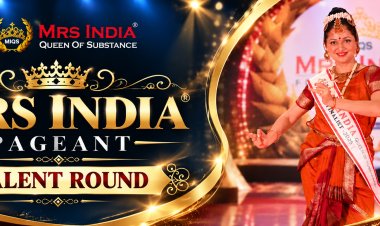
Mrs India Talent Round: How to Choose, Prepare and Present Your Talent
Learn how to prepare for the Mrs India Talent Round, choose the right performance, present your talent confidently and avoid common mistakes.
 mrsindia
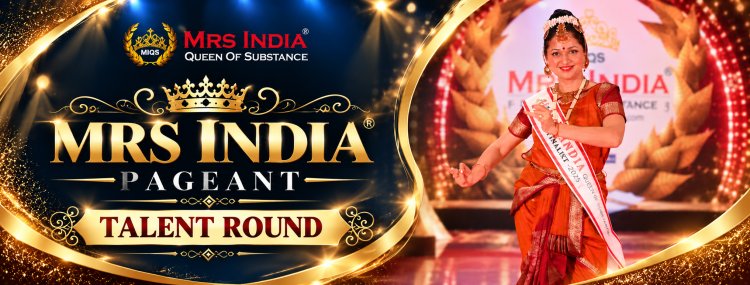
A Mrs India pageant is not only about appearance, fashion or walking on stage.
It is also an opportunity to show who you are, what you can do and what makes your personality distinctive.
That is the purpose of the Mrs India Talent Round.
For one contestant, the talent may be classical dance. For another, it may be singing, playing an instrument, painting, poetry, theatre or a traditional cultural performance.
Some women may have developed their talent during childhood. Others may have discovered their passion only after marriage, motherhood or a professional career.
The important question is not:
“What is the most impressive talent?”
It is:
“What talent can I present authentically, confidently and effectively on stage?”
The current official Mrs India Queen of Substance website lists a Talent Round among its pageant activities and also features Talent Round presentations in its portfolio. Its published event format includes Interview, Talent, Q&A, Sports, Traditional Costume and Evening Gown rounds.
Because pageant formats can change, contestants should confirm the exact rules applicable to their season before preparing their final performance.
What Is the Mrs India Talent Round?
The Talent Round gives a contestant an opportunity to showcase a skill, ability, passion or form of creative expression.
Unlike an interview, where judges primarily hear your thoughts, or a ramp walk, where they observe your stage presence, the talent round gives you a chance to demonstrate something you can actually do.
A performance can reveal:
-
Creativity
-
Discipline
-
Confidence
-
Practice
-
Cultural knowledge
-
Emotional expression
-
Stage presence
-
Personality
-
Communication
-
Individuality
For example:
Dance can demonstrate movement, expression and discipline.
Singing can demonstrate musical ability and emotional connection.
Poetry can demonstrate language and communication.
Painting can demonstrate creativity.
Yoga can demonstrate control and discipline.
Theatre can demonstrate expression and storytelling.
A cultural performance can showcase heritage and identity.
Your talent becomes another way for judges and the audience to understand the woman behind the contestant number.
Why Is the Talent Round Important?
A pageant includes different rounds because no single activity can reveal everything about a contestant.
A woman may not be the most experienced ramp walker but may have exceptional musical ability.
Another contestant may be quiet during an introduction but become extremely expressive when performing.
Someone else may have spent years practising a traditional Indian art form.
The Talent Round gives each contestant another opportunity to communicate her individuality.
The official Mrs India Queen of Substance judging criteria include Talent and Skills, alongside Beauty and Personality, Intelligence and Confidence, and Community Involvement and Social Impact.
That makes preparation for the Talent Round an important part of a contestant's overall pageant preparation.
What Talents Can You Present at Mrs India?
The appropriate choices depend on the current season's rules and available stage facilities.
Potential talent categories may include:
Dance
Examples include:
-
Bharatanatyam
-
Kathak
-
Odissi
-
Kuchipudi
-
Contemporary
-
Bollywood
-
Folk dance
-
Fusion
-
Freestyle
A dance performance can be particularly effective when it has a clear beginning, development and ending.
Singing
A contestant may choose:
-
Classical singing
-
Semi-classical
-
Bollywood
-
Folk
-
Devotional music
-
Western vocal performance
-
Regional-language songs
Choose something within your comfortable vocal range.
Do not select a technically difficult song simply because it sounds impressive.
Instrumental Music
If you play an instrument, it can be a strong way to demonstrate a skill that is genuinely yours.
Possibilities may include:
-
Piano
-
Guitar
-
Violin
-
Flute
-
Tabla
-
Sitar
-
Keyboard
-
Other instruments
Always confirm whether the venue provides equipment or whether contestants must bring their own.
Poetry or Spoken Word
Not every talent needs music or choreography.
Poetry can be powerful when delivered with:
-
Voice modulation
-
Expression
-
Appropriate pauses
-
Eye contact
-
Strong storytelling
You could perform an original poem or another permissible piece, subject to the pageant's rules.
Theatre or Monologue
Acting can demonstrate:
-
Facial expression
-
Emotional range
-
Voice control
-
Storytelling
-
Confidence
A short monologue can be effective if it has a clear message and does not require complicated stage equipment.
Painting or Visual Art
Visual artists can consider presenting their creative ability in a stage-friendly way.
However, a contestant should think carefully about how the talent will be communicated to the audience.
A painting that takes 30 minutes to complete may not translate effectively to a short stage performance.
Instead, you might demonstrate a specific artistic technique or present a prepared artwork while explaining the story behind it, if permitted.
Yoga or Fitness
A contestant with expertise in yoga, fitness or another physical discipline may consider a short demonstration.
The performance should be:
-
Safe
-
Controlled
-
Practised
-
Appropriate for the venue
Do not attempt a difficult movement on stage merely for shock value.
Traditional or Cultural Performance
This can be a meaningful option for contestants who want to represent their cultural heritage.
You could explore:
-
Regional dance
-
Folk music
-
Traditional storytelling
-
Cultural art
-
Heritage-based performance
If you choose this route, understand the cultural significance of what you are presenting.
What If You Don't Think You Have a Talent?
This is one of the most common concerns among first-time contestants.
You may think:
“I am not a dancer.”
“I cannot sing.”
“I have never performed on stage.”
That does not necessarily mean you have nothing to present.
Think about skills you have developed over the years.
Perhaps you:
-
Write poetry
-
Cook creatively
-
Paint
-
Teach
-
Speak well
-
Tell stories
-
Practise yoga
-
Play an instrument
-
Create crafts
-
Perform traditional arts
-
Have a professional skill
-
Have a unique cultural practice
However, do not force an ordinary activity into a “talent” simply because you feel pressured to perform.
Your strongest option is usually something you can present naturally and confidently.
How to Choose the Right Talent
Use the following five-question test.
Question 1: What am I genuinely good at?
Do not choose something simply because it looks impressive.
Choose something you have actually practised.
Question 2: Can I perform it on stage?
A talent may be excellent in a classroom or studio but difficult to present in a pageant venue.
Think about:
-
Stage size
-
Lighting
-
Sound
-
Props
-
Time
-
Costume
-
Audience visibility
Question 3: Does it represent me?
Your performance should tell the audience something about you.
For example:
A classical dancer may be expressing years of cultural training.
A mother performing a song she learned from her family may be sharing a personal connection.
An entrepreneur delivering a spoken-word piece about women may be communicating her purpose.
The story behind the talent can make the performance more meaningful.
Question 4: Can I perform it confidently?
Ask yourself:
Could I perform this in front of judges without becoming dependent on complicated equipment or other people?
The simpler the performance structure, the easier it can be to control under pressure.
Question 5: Can I practise it repeatedly?
A talent performance becomes stronger through repetition.
Choose something you can rehearse consistently before the event.
Talent vs Performance: Understand the Difference
A talent is the underlying skill.
A performance is how you present that skill.
For example:
Talent: Singing
Performance: A carefully selected song with an engaging introduction and controlled delivery.
Talent: Dance
Performance: A choreographed sequence with a clear story.
Talent: Poetry
Performance: Voice modulation, pauses, expression and stage movement.
You may have a genuine talent but still need to learn how to present it effectively.
How to Structure Your Mrs India Talent Performance
A short performance should have a beginning, middle and ending.
Beginning: Capture Attention
Start confidently.
Avoid unnecessary delays.
Your opening should immediately communicate what you are presenting.
Middle: Show Your Skill
This is where you demonstrate your ability.
Avoid trying to include every skill you possess.
One strong performance is usually easier for the audience to remember than five unrelated ideas.
Ending: Finish Clearly
Do not simply stop when the music ends.
Have a planned final position, expression or movement.
A confident ending creates a sense of completion.
How Long Should the Talent Performance Be?
This is one area where contestants should not rely on old articles or assumptions.
The current official website confirms that a Talent Round exists, but the exact performance duration and technical requirements should be verified directly with the organisation for the applicable season.
Before finalising your performance, confirm:
-
Maximum duration
-
Music format
-
Audio submission deadline
-
Props allowed
-
Number of supporting performers allowed
-
Costume requirements
-
Microphone requirements
-
Stage dimensions
-
Equipment availability
-
Backstage arrangements
These details can affect your choreography and performance design.
How to Prepare for the Mrs India Talent Round
Start Early
Do not wait until the final week.
Ideally, divide preparation into stages.
Stage 1: Select
Choose your talent.
Stage 2: Develop
Create the performance.
Stage 3: Practise
Repeat it regularly.
Stage 4: Record
Record yourself performing.
Stage 5: Improve
Watch the recording objectively.
Stage 6: Rehearse Under Pressure
Practise wearing the intended costume and performing with the same music or equipment wherever possible.
Record Yourself During Practice
One of the most useful preparation techniques is recording your performance.
Watch for:
-
Posture
-
Facial expressions
-
Timing
-
Eye contact
-
Unnecessary movements
-
Weak transitions
-
Nervous gestures
-
Volume
-
Stage positioning
You may discover things you never notice while performing.
Practise Without Music
If your performance involves music, practise it occasionally without the music.
This can help you understand:
-
Timing
-
Sequence
-
Transitions
-
Movement memory
Also practise with the actual track.
If there is a technical problem on stage, being familiar with your performance structure can help you remain composed.
Don't Overcomplicate Your Talent
One of the biggest mistakes contestants make is trying to make a short performance look like a full stage production.
You may be tempted to add:
-
Multiple costumes
-
Many props
-
Several songs
-
Complex choreography
-
Multiple performers
-
Complicated transitions
More does not automatically mean better.
Complexity creates more opportunities for something to go wrong.
A well-rehearsed, focused performance can be much more effective.
Connect Your Talent With Your Story
This is one of the strongest ways to make your performance memorable.
Suppose you are a mother who returned to classical dance after many years.
That story matters.
Suppose you learned singing from your grandmother.
That story matters.
Suppose painting helped you express yourself during a difficult period.
That story matters.
Suppose your talent is connected to your social cause.
That matters too.
The audience should not only remember what you performed.
They should remember why you performed it.
Talent Round and Personal Branding
Your talent can become part of your personal brand.
For example:
A classical dancer can position herself around culture and heritage.
A singer can build content around music.
An entrepreneur can connect her public speaking talent with leadership.
A fitness enthusiast can communicate wellness.
A poet can develop a voice around women's experiences.
The Talent Round can therefore become more than one evening on stage.
It can become part of your identity beyond the pageant.
Common Mistakes in the Mrs India Talent Round
1. Choosing Someone Else's Talent
Do not copy another contestant simply because her performance was successful.
Your personality is different.
2. Selecting a Skill You Have Not Practised
Confidence cannot compensate for insufficient preparation.
3. Making the Performance Too Long
Always follow the official time limit.
4. Using Too Many Props
Props should support the performance rather than become the performance.
5. Ignoring Stage Limitations
A rehearsal room may be completely different from a stage.
6. Forgetting Facial Expressions
Technical skill alone does not communicate emotion.
7. Looking Down Constantly
Audience and judges should be able to see your confidence.
8. Starting Nervously
Prepare your opening carefully.
The first few seconds matter.
9. Trying to Be Perfect
If something goes slightly wrong, continue.
Professional performers know how to recover.
What Should You Wear for the Talent Round?
Your costume should complement the performance.
For dance, it may need to allow movement.
For music, it should allow comfortable posture and breathing.
For yoga or fitness, mobility is important.
For cultural performances, authenticity and appropriateness matter.
Before finalising your costume, confirm any applicable pageant rules.
Most importantly:
Never choose an outfit that makes you uncomfortable while performing.
Confidence is easier when you are physically comfortable.
What If You Make a Mistake on Stage?
Mistakes happen.
A music cue may start late.
You may forget one movement.
A prop may not work.
You may lose your place.
The worst response is to visibly panic.
Instead:
-
Take a breath.
-
Continue with the next familiar section.
-
Maintain your expression.
-
Avoid apologising during the performance.
-
Finish confidently.
The ability to recover gracefully is itself a valuable stage skill.
A 14-Day Mrs India Talent Round Preparation Plan
Days 1–2
Select your talent and performance concept.
Days 3–4
Create the sequence.
Days 5–6
Practise individual sections.
Days 7–8
Perform the complete routine.
Days 9–10
Record yourself and identify weaknesses.
Days 11–12
Practise with costume and music.
Day 13
Complete a full mock performance.
Day 14
Light rehearsal and rest.
Do not exhaust yourself immediately before the event.
Mrs India Talent Round: Final-Day Checklist
Before leaving for the venue, check:
☐ Music file
☐ Backup music file
☐ Costume
☐ Shoes
☐ Accessories
☐ Props
☐ Makeup requirements
☐ Performance sequence
☐ Water
☐ Emergency kit
☐ Contact information
☐ Any documents requested by the organisers
And most importantly:
Know your performance.
Frequently Asked Questions About the Mrs India Talent Round
What is the Mrs India Talent Round?
It is a pageant round where contestants showcase a skill, ability, creative performance or cultural talent. The official Mrs India Queen of Substance website lists Talent as one of its pageant rounds.
What talent can I present at Mrs India?
Potential choices can include dance, singing, instrumental music, poetry, theatre, painting, yoga, cultural performance and other skills, subject to the current competition rules.
Do I need professional experience?
Not necessarily. A contestant does not need to be a professional performer simply to have a talent. However, she should choose something she can perform confidently and prepare properly.
Can I perform a traditional Indian dance?
A traditional or cultural performance can be a meaningful choice, provided it complies with the current rules.
Can I sing in the Talent Round?
Singing can be considered if permitted under the current format. Choose a song suited to your voice and confirm the music and technical requirements beforehand.
Can I use props?
This depends on the current event rules. Always confirm which props are permitted before designing the performance.
Can someone perform with me?
Do not assume that supporting performers are permitted. Confirm the current rules with the organising team.
How long should my talent performance be?
The exact duration should be confirmed for the relevant season. The current official website confirms the Talent Round but does not provide a sufficiently reliable current duration in the information reviewed.
Is the Talent Round the only round that matters?
No. The published Mrs India Queen of Substance format includes several rounds, including Interview, Talent, Q&A, Sports, Traditional Costume and Evening Gown.
What if I don't have a special talent?
Think broadly about your genuine skills and interests. You may have a creative, cultural, communication or performance ability that you have not previously considered a pageant talent.
Should I choose a complicated performance?
Not necessarily. A simple performance executed confidently and professionally can be stronger than a complicated routine that is under-rehearsed.
Final Thoughts: Your Talent Is Part of Your Story
The Mrs India Talent Round is not simply a competition to determine who can dance the best, sing the highest note or perform the most complicated routine.
It is an opportunity to communicate something about yourself.
Your talent may represent your childhood.
It may represent your culture.
It may represent your profession.
It may represent motherhood.
It may represent a passion you rediscovered after marriage.
It may represent a dream you never gave up.
That is what can make a performance meaningful.
The strongest approach is therefore simple:
Choose something genuine. Prepare thoroughly. Present it confidently. Tell your story.
Mrs India Queen of Substance officially includes Talent and Skills among its published judging criteria and provides a Talent Round within its pageant format.
If you are considering participation, understand the current eligibility requirements, audition process and pageant rules before beginning your final performance preparation.
Ready to Explore Mrs India Queen of Substance?
If you are a married Indian woman interested in participating in the Mrs India Queen of Substance journey, begin by checking the current official registration and eligibility information.
Official Contact Details
Call / WhatsApp: +91 9810417419
Email: info@mrsindiaqueen.com
Website: www.mrsindiaqueen.com
Instagram: @mrsindiaqueen
Before You Prepare Your Talent
Confirm the current:
-
Talent Round rules
-
Performance duration
-
Music requirements
-
Props policy
-
Costume guidelines
-
Stage arrangements
-
Judging criteria
-
Pageant schedule
Your talent does not have to be the biggest performance in the room. It needs to be authentically yours—and prepared well enough for you to present it with confidence.
Start your Mrs India journey at www.mrsindiaqueen.com.